The space industry witnessed a pivotal moment on March 6, 2025, as Intuitive Machines attempted its IM-2 lunar mission, part of NASA’s Commercial Lunar Payload Services (CLPS) initiative. While the mission aimed to deliver scientific payloads and technology demonstrations to the Moon’s South Pole, it encountered significant challenges, marking it as a partial success with far-reaching implications for the company’s future and the broader lunar exploration landscape.
What Happened During the IM-2 Mission?
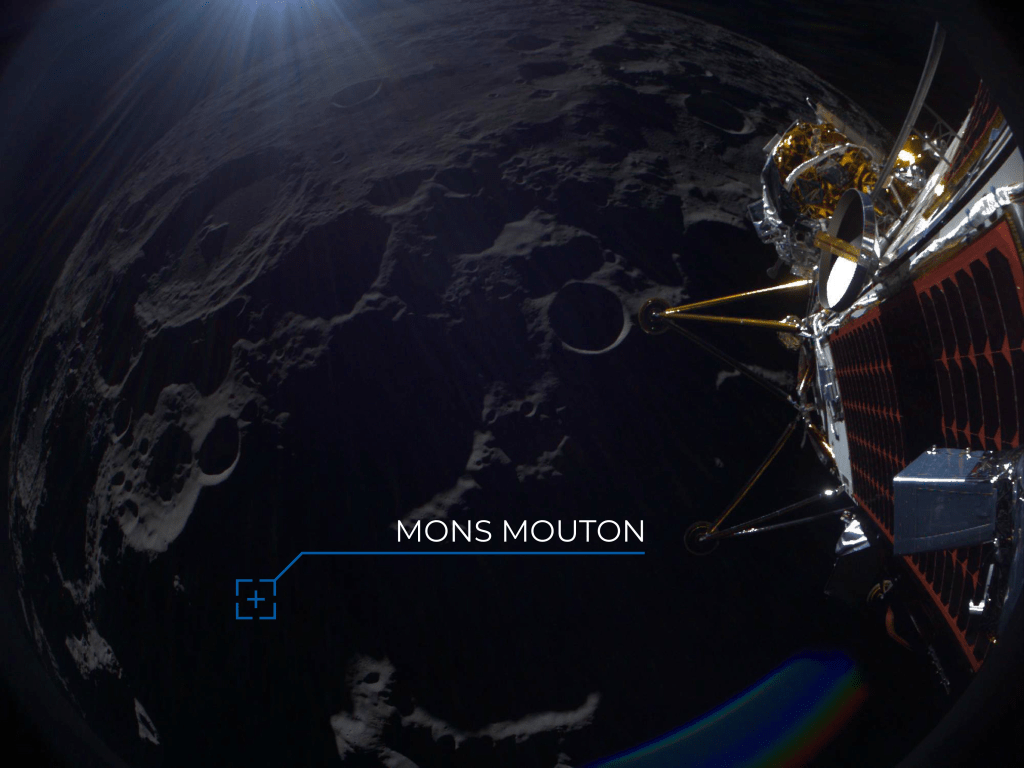
Intuitive Machines’ Nova-C lander, named Odysseus 2, launched successfully on February 27, 2025, aboard a SpaceX Falcon 9 rocket, carrying NASA instruments and commercial payloads to the lunar surface. The mission targeted Mons Mouton, a plateau near the Moon’s South Pole, to gather data on lunar volatiles, space weather, and resource potential, paving the way for future crewed missions under NASA’s Artemis program.
However, as Odysseus 2 descended on March 6, 2025, it faced critical issues. Telemetry data indicated that the lander experienced a navigation error during its final approach, likely due to a malfunction in its laser-guided landing system—a technology critical for precise lunar touchdowns. Despite an attempt to troubleshoot in real-time using experimental NASA instruments, as Intuitive Machines had done successfully in its IM-1 mission in 2024, the lander touched down harder than anticipated. It tipped over upon landing, resting at an awkward angle, which compromised some of its scientific instruments and communication capabilities. While initial contact was established, the lander’s power and data transmission were limited, and it failed to achieve all mission objectives, including full payload deployment and extended lunar surface operations.
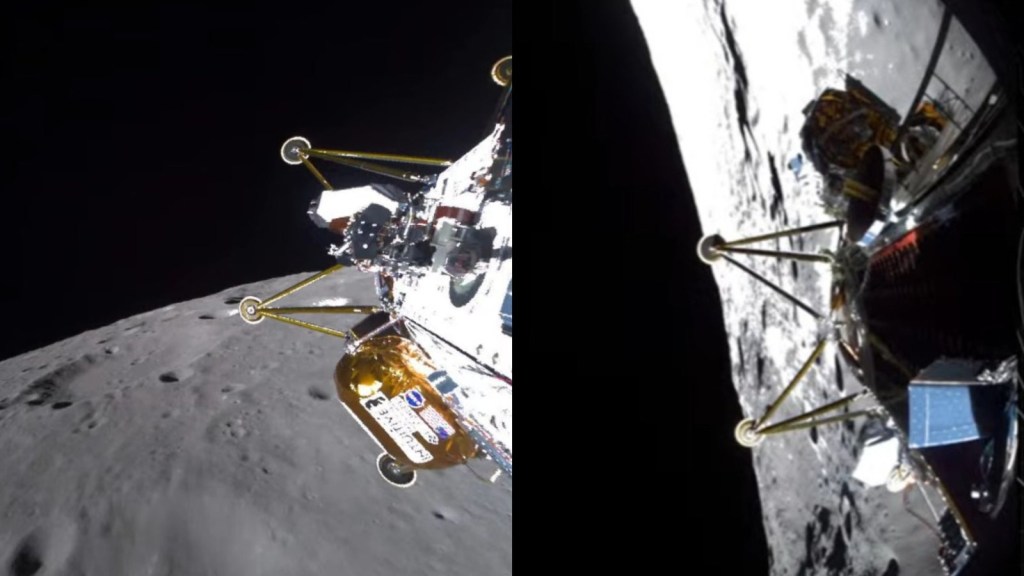
Intuitive Machines confirmed the partial success, noting that some data and images were retrieved before the lander’s power waned, but the mission fell short of delivering the comprehensive scientific return anticipated. This contrasts with the company’s historic IM-1 mission in 2024, where Odysseus landed on its side but still achieved significant scientific outcomes, marking the first U.S. lunar landing in over 50 years.
Implications for Upcoming Missions
The IM-2 setback raises questions about Intuitive Machines’ readiness for future lunar missions, including IM-3 and beyond, scheduled within the next few years as part of NASA’s CLPS contracts. The navigation and landing issues highlight the technical challenges of lunar operations, particularly in the rugged South Pole region, where uneven terrain and communication delays pose risks. NASA, which relies on Intuitive Machines to deliver payloads critical for Artemis, may scrutinize the company’s engineering processes and require enhanced testing or redundancy measures for future landers.
However, the partial success also offers valuable lessons. Intuitive Machines’ ability to establish contact and retrieve limited data demonstrates resilience and the potential for quick adaptation, as seen in IM-1. The company is likely to refine its navigation systems, improve landing algorithms, and strengthen hardware robustness, potentially accelerating technological advancements for IM-3 and subsequent missions. These improvements could position Intuitive Machines as a more reliable partner for NASA’s lunar ambitions, ensuring safer and more effective deliveries to support the Artemis program’s goal of sustainable lunar exploration by the late 2020s.
Implications for Intuitive Machines
For Intuitive Machines, the IM-2 outcome is a mixed bag. On one hand, the partial failure could erode investor confidence and delay commercial contracts, as the space industry closely monitors performance metrics for new space companies. The company’s stock, already volatile due to its rapid growth and high-profile lunar contracts, may face pressure in the short term. Additionally, the mission’s challenges could invite scrutiny from competitors like Astrobotic and Firefly Aerospace, both vying for CLPS contracts, potentially intensifying competition in the lunar lander market.
On the other hand, Intuitive Machines’ track record—highlighted by the IM-1 success and its diversified portfolio in space exploration, infrastructure, and services—offers a foundation for recovery. The company’s technical expertise, demonstrated by its ability to troubleshoot in real-time, and its partnerships with NASA, SpaceX, and private entities, position it to rebound. By addressing IM-2’s shortcomings, Intuitive Machines can strengthen its reputation as a leader in lunar missions, potentially securing additional funding and contracts for future lunar and cislunar operations.
The Broader Impact on the Space Industry
The IM-2 mission underscores the inherent risks of lunar exploration, even for experienced players like Intuitive Machines. Yet, it also reinforces the space industry’s growth trajectory, where setbacks are often stepping stones to innovation. The space ecosystem, fueled by private investment, technological advancements, and NASA’s push for commercial partnerships, remains resilient. For new space companies, IM-2 serves as a reminder of the importance of redundancy, rigorous testing, and adaptability in the face of lunar challenges.
As Intuitive Machines navigates this setback, the incident highlights the critical role of private companies in advancing lunar exploration. With NASA’s Artemis program relying on CLPS providers to build a lunar economy, Intuitive Machines’ ability to learn, adapt, and innovate will be pivotal. The IM-2 mission, though not a complete success, adds to the collective knowledge of lunar landings, benefiting the entire space industry as it pushes toward sustainable Moon exploration and beyond.


 Earth2Space
Leave a reply to EarendiL the Wanderer Cancel reply