Picture this: you’re lost in a labyrinth of city streets, your phone buzzing with turn-by-turn directions. Or maybe you’re a farmer in a remote valley, pulling up a weather forecast to decide if today’s the day to plant. Perhaps you’re streaming a documentary about black holes from a cabin miles from the nearest cell tower. What ties these moments together? Machines orbiting hundreds—or thousands—of miles above your head. Satellites, the unsung heroes of modern life, are everywhere yet invisible, quietly shaping how we connect, navigate, and survive in 2025.
Today, on February 21, 2025, the satellite landscape is more vibrant and vital than ever. From tiny CubeSats snapping daily photos of Earth to sprawling constellations beaming internet to the farthest corners, these technologies have woven themselves into the fabric of human existence. They’re not just tools for scientists or space agencies—they’re lifelines for billions. In this article, we’ll explore the cutting-edge satellite technologies powering our world right now and reveal how they’re making life better for us humans on Earth, one orbit at a time.
The Satellite Tech Toolbox of 2025
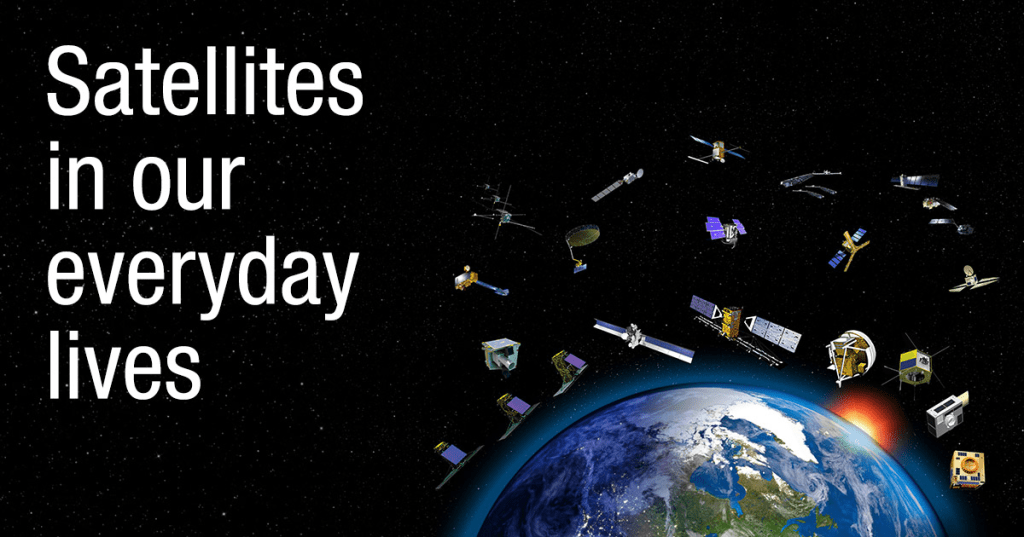
Satellites come in all shapes and sizes, each with a unique role in the cosmic orchestra. Let’s unpack the key players dominating the skies in 2025.
First up are the small satellites—CubeSats and nanosats. These pint-sized powerhouses, some no bigger than a loaf of bread, have democratized space. Built with off-the-shelf components and launched in flocks aboard reusable rockets, they’re cheap and versatile. In 2025, companies like Planet Labs operate hundreds of CubeSats, capturing high-res images of every square inch of Earth daily. Their tech? Advanced miniaturized sensors, solar panels, and onboard AI that crunches data before beaming it back. Whether it’s tracking deforestation in the Amazon or spotting illegal fishing off Japan, these little orbiters punch above their weight.
Then there’s the heavy hitters of connectivity: broadband constellations. Think SpaceX’s Starlink, which now boasts over 6,000 satellites in low Earth orbit (LEO), or OneWeb, nearing full deployment with hundreds more. These networks use phased-array antennas to focus signals precisely and laser links between satellites to zip data around the globe faster than fiber optics. In 2025, Starlink’s latest batch—launched just last month—pushed peak speeds past 300 Mbps, while OneWeb’s merger with Eutelsat has it serving airlines and ships. The result? Internet that blankets the planet, no matter where you stand.

Don’t count out the old guard, though. Geostationary satellites, hovering 36,000 kilometers above the equator, remain kings of consistency. These behemoths—like NOAA’s GOES-19, upgraded in late 2024—use high-throughput systems to broadcast TV, monitor storms, and relay military signals. Their tech has evolved, too: sharper cameras, more powerful transponders, and solar arrays that keep them humming for decades. They’re the steady hands in a frenetic space race.
Finally, there’s the specialized crew: satellites with hyperspectral imaging, infrared, or synthetic aperture radar (SAR). These aren’t just cameras—they’re super-senses. Hyperspectral sensors see hundreds of wavelengths, picking out minerals or plant health from orbit. SAR pierces clouds and darkness, mapping floods or earthquakes in 3D. Europe’s Copernicus program, for instance, rolled out new Sentinel satellites in January 2025, boosting our ability to track everything from methane leaks to melting ice caps.
How Satellites Improve Life on Earth
So, what does all this tech mean for us down here? Plenty. Satellites aren’t just floating gadgets—they’re solving problems and stitching humanity closer together. Here’s how they’re making a difference in 2025.
Connectivity for All: Remember the days when rural meant “disconnected”? In 2025, that’s fading fast. Broadband constellations have shrunk the digital divide to its smallest yet. A teacher in a Mongolian steppe village now streams coding lessons to her students via Starlink. A doctor in rural Zambia consults a specialist over video, thanks to OneWeb. And then there’s AST SpaceMobile, a rising star taking connectivity to a new level. Unlike Starlink’s dish-based setup, AST’s BlueBird satellites beam cellular broadband straight to your regular smartphone—no extra gear needed. In 2024, they launched five Block 1 BlueBirds, and by mid-2025, they plan to deploy up to 45 Block 2 satellites, aiming for continuous U.S. coverage with partners like AT&T and Verizon. Picture a hiker in the Rockies texting without a signal tower, or a fisherman off Senegal calling home—AST’s “no dead zones” vision is turning phones into satellite receivers. The UN reports internet penetration hit 70% globally this year—up 5% from 2024—and satellites, including AST’s groundbreaking approach, deserve much of the credit. For the 3 billion people once offline, this isn’t just convenience; it’s opportunity.
Navigating the World: Whether you’re dodging traffic in São Paulo or sailing through the Arctic, satellites keep you on course. The big three—GPS (U.S.), Galileo (Europe), and GLONASS (Russia)—form a global navigation web. In 2025, Galileo’s latest upgrade, rolled out last fall, offers centimeter-level precision. That’s a game-changer for self-driving cars weaving through Tokyo or precision planters sowing fields in Iowa. Drones dropping packages on your doorstep? They’re pinging satellites every second. Last month, a cargo ship avoided an iceberg off Greenland, its captain crediting real-time GPS updates. Motion is smoother, safer, and smarter because of the sky.

Weather and Disaster Preparedness: If you’ve checked the forecast today, thank a satellite. In 2025, weather birds like GOES-19 and Europe’s Meteosat Fourth Generation (launched January 2025) deliver hyper-detailed storm tracks every few minutes. When Hurricane Lila barreled toward Florida last week, satellite data shaved hours off evacuation warnings—hundreds of lives saved. Beyond storms, they’re spotting droughts in East Africa or wildfires in Australia, giving aid workers a head start. Precision matters, and satellites deliver it.
Feeding the Planet: With 8 billion mouths to feed, agriculture leans hard on orbit. CubeSats with infrared sensors scan soil moisture and crop health, beaming insights to farmers’ phones. In India, a pilot program launched this year uses Planet Labs’ data to tweak irrigation in real time—yields are up 15%. Meanwhile, SAR-equipped satellites map illegal logging in Brazil, helping rangers protect the rainforest that keeps our air breathable. Food security isn’t just about planting—it’s about seeing, and satellites give us the eyes.
Protecting the Environment: Climate change is the fight of our era, and satellites are our scouts. The new Sentinel-6B, launched by ESA in 2025, tracks sea level rise to the millimeter. Hyperspectral sats sniff out methane plumes over oil fields—data that forced a major cleanup in Texas this January. Wildlife trackers follow elephant herds across Kenya, curbing poaching. Every pixel from orbit is a weapon against a warming world.
The Human Angle—Stories From 2025
Tech is only as good as the lives it touches. Here are three snapshots from 2025 that bring satellites down to Earth.
In Mongolia’s Gobi Desert, a teacher named Altantsetseg powers up her solar tablet. Starlink’s signal streams in, and her 12 students huddle around to learn Python. “They dream of building apps,” she says. “The world feels closer now.” A decade ago, her village had no internet—today, it’s a classroom.
Off Florida’s coast, Javier packs his family into their car as Hurricane Lila looms. His phone buzzes with a GOES-19 update: the storm’s shifting west. They’re out of harm’s way by dawn. “We didn’t guess,” he says. “We knew.” Satellites turned chaos into clarity.
In Tokyo, Aiko’s electric SUV glides through rush hour, rerouting on the fly. Galileo’s pinpoint signals dodge a jam on the Shuto Expressway. She’s home early, sipping tea. “It’s like the car knows the city better than I do,” she laughs. Navigation isn’t just travel—it’s time reclaimed.
What’s Next for Satellite Tech?
The sky’s buzzing in 2025, and it’s only getting busier. Reusable rockets—like SpaceX’s Starship or Rocket Lab’s Neutron, which flew its first payload last month—slash launch costs, flooding orbit with innovation. On-orbit servicing, like Northrop Grumman’s Mission Extension Vehicles, keeps old sats alive longer; one just refueled a comms bird in January. Amazon’s Kuiper constellation, still lagging Starlink, promises 3,000+ satellites by 2026, while NASA’s lunar Gateway tests relay sats for Artemis missions.
The big picture? Satellites aren’t just improving life on Earth—they’re prepping us for the stars. Lunar comms will guide astronauts back to the Moon this decade. Deep-space relays could ping signals from Mars. The tech we lean on today is the foundation for tomorrow’s frontier.
Orbiting for Humanity
In 2025, satellites are more than machines—they’re partners. From the CubeSats mapping our fields to the constellations—including AST SpaceMobile’s phone-direct signals—lighting up our screens, they’re knitting a tighter, smarter, safer world. Next time you glance at your weather app, dodge a traffic snarl, or call a friend from nowhere, think of the orbiting heroes making it happen. They’re up there, unseen, working for us all.
Want to keep exploring how the cosmos touches your life? Stick with From Earth to Space—because the story’s just beginning.
 Earth2Space
Leave a comment